Collision problem
Theoretical problem
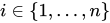
The r-to-1 collision problem is an important theoretical problem in complexity theory, quantum computing, and computational mathematics. The collision problem most often refers to the 2-to-1 version: given 


01Classical solutions
Deterministic
Solving the 2-to-1 version deterministically requires 

This is a straightforward application of the pigeonhole principle: if a function is r-to-1, then after 
Randomized
If we allow randomness, the problem is easier. By the birthday paradox, if we choose (distinct) queries at random, then with high probability we find a collision in any fixed 2-to-1 function after 
02Quantum solution
The BHT algorithm, which uses Grover's algorithm, solves this problem optimally by only making 

Sources and credits
This article is adapted from the Wikipedia article “Collision problem”, written by its contributors and licensed under CC BY-SA 4.0. Fathomly has changed the layout, removed citation markers, navigation and maintenance notices, and adjusted punctuation. This adapted version is shared under the same license. For references, see the original article.
Fathomly is not affiliated with or endorsed by the Wikimedia Foundation. Spotted a problem? Tell us.