Normal number (computing)
Number type in floating-point arithmetic
In computing, a normal number is a non-zero number in a floating-point representation which is within the balanced range supported by a given floating-point format: it is a floating point number that can be represented without leading zeros in its significand.
The magnitude of the smallest normal number in a format is given by:

where b is the base (radix) of the format (like common values 2 or 10, for binary and decimal number systems), and 
Similarly, the magnitude of the largest normal number in a format is given by
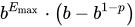
where p is the precision of the format in digits and 

In the IEEE 754 binary and decimal formats, b, p,
| Format |  |  |  |  |
Smallest Normal Number | Largest Normal Number |
|---|---|---|---|---|---|---|
| binary16 | 2 | 11 | −14 | 15 |  |
 |
| binary32 | 2 | 24 | −126 | 127 | 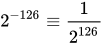 |
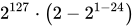 |
| binary64 | 2 | 53 | −1022 | 1023 | 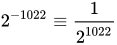 |
 |
| binary128 | 2 | 113 | −16382 | 16383 | 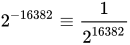 |
 |
| decimal32 | 10 | 7 | −95 | 96 | 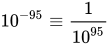 |
 |
| decimal64 | 10 | 16 | −383 | 384 | 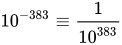 |
 |
| decimal128 | 10 | 34 | −6143 | 6144 | 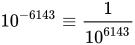 |
 |
For example, in the smallest decimal format in the table (decimal32), the range of positive normal numbers is 10−95 through 9.999999 × 1096.
Non-zero numbers smaller in magnitude than the smallest normal number are called subnormal numbers (or denormal numbers).
Zero is considered neither normal nor subnormal.
Sources and credits
This article is adapted from the Wikipedia article “Normal number (computing)”, written by its contributors and licensed under CC BY-SA 4.0. Fathomly has changed the layout, removed citation markers, navigation and maintenance notices, and adjusted punctuation. This adapted version is shared under the same license. For references, see the original article.
Fathomly is not affiliated with or endorsed by the Wikimedia Foundation. Spotted a problem? Tell us.