Culham
Village in Oxfordshire, England

Culham is a village and civil parish in a bend of the River Thames, 1 mile (1.6 km) south of Abingdon in Oxfordshire. The parish includes Culham Science Centre and Europa School UK (formerly the European School, Culham, which was the only Accredited European School within the United Kingdom). The parish is bounded by the Thames to the north, west and south, and by present and former field boundaries to the east. It is low-lying and fairly flat, rising from the Thames floodplain in the south to a north-facing escarpment in the north up to 260 feet (80 m) above sea level. The 2011 census recorded its population as 453.
01Manor
The toponym comes from the Old English Cula's hamm, referring to the village's position in a bend of the Thames. Culham is known to have existed by the reign of King Coenwulf of Mercia early in the 9th century, by which time the manor belonged to Abingdon Abbey. Soon after the Norman Conquest of England part of the manor was seized by William the Conqueror, but the land was restored to the abbey and remained in its possession until the dissolution of the monasteries in 1538.
The west wing of Culham Manor was built in the 15th century as a medieval grange for Abingdon Abbey. It is half-timbered, with a stone ground floor and timber-framed first floor. In 1610 it was extended with a new north front and east wing. The east wing was later demolished but the 17th-century north front survives. The house is a Grade II* Listed building. In 1685 a dovecote was built for the manor house. It, too, is now Grade II* listed. North of the house is a 17th-century sundial mounted on a 13th-century column.

02Parish church
Several records suggest that Culham may have had a chapel since the 9th century. A parish church dedicated to Saint Paul was built in the 12th century. It was cruciform, having a chancel, nave and north and south transepts, and had features from the Early English and Decorated periods. There was a tower, and this was demolished and replaced in 1710. In 1852 the whole church except the 1710 tower was demolished and replaced with a new Gothic Revival building in 13th century style designed by Joseph Clarke.
During the rebuilding, heraldic stained glass installed in the north transept in 1638 was transferred to a window in the north aisle of the new church. The tower has a ring of six bells, but currently for technical reasons it is not possible to ring them. Mears and Stainbank of the Whitechapel Bell Foundry cast or re-cast five of the bells in 1921, and cast the present tenor bell in 1926. St Paul's also has a Sanctus bell cast in 1774 by Edne Witts of Aldbourne, Wiltshire. St Paul's parish is now part of the Benefice of Dorchester.
In 1486 brothers Sir Humphrey and Thomas Stafford sought sanctuary in the church after they had fled from the newly crowned King Henry VII after the brothers were defeated at the Battle of Bosworth. On 14 May 1486, sixty of the King's men entered the church and arrested the two brothers who were tried for treason. Sir Humphrey Stafford was executed; however, Henry pardoned the younger brother Thomas. Culham House is a mid-18th-century brick Georgian house, built to replace an earlier rectory. It was probably designed and built by John Phillips of London.

04Europa School, UK
In 1851 Samuel Wilberforce, Bishop of Oxford founded the Diocesan Training College for Schoolmasters (Culham College). The building was designed by Joseph Clarke and completed in 1852. The building was altered and extended in about 1960. The college became Culham Institute, a charitable research organisation associated with the Church of England housed in the Educational Studies Department of Oxford University. In 1978 the European School, Culham was founded in its former buildings before closing in 2017. Since 2012 the entire campus has gradually been subsumed by the Europa School UK.
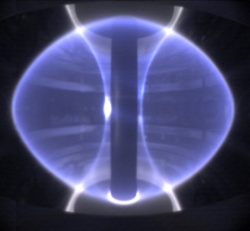
05Culham Science Centre
In 1941 the Fleet Air Arm opened Royal Naval Air Station, HMS Hornbill, between Culham railway station and Clifton Hampden village. Most of the airfield is in Clifton Hampden parish, but HMS Hornbill was also called RNAS Culham. A Royal Observer Corps Post was also constructed, in a field east of Tollgate Road, adjacent to a pre existent Pillbox, just up the hill from the rifle range, next to the river. The Admiralty closed the airfield in 1956 and transferred it to the UK Atomic Energy Authority in 1960. The former airfield is now the Culham Science Centre, an 800,000 square metre scientific research site that most notably includes two major nuclear fusion experiments: JET and MAST. The START Nuclear Fusion Experiment was also conducted on the site until MAST succeeded it in 1999.
Sources and credits
This article is adapted from the Wikipedia article “Culham”, written by its contributors and licensed under CC BY-SA 4.0. Fathomly has changed the layout, removed citation markers, navigation and maintenance notices, and adjusted punctuation. This adapted version is shared under the same license. For references, see the original article.
Images, from Wikimedia Commons:
- MAST plasma image.jpg by Culham Centre for Fusion Energy., CC BY-SA 3.0
- Trees either side - geograph.org.uk - 1429730.jpg by Bill Nicholls, CC BY-SA 2.0
- Old Culham Bridge - geograph.org.uk - 940811.jpg by Rod Allday, CC BY-SA 2.0
- Culham School - geograph.org.uk - 19930.jpg by Claire Ward, CC BY-SA 2.0
Fathomly is not affiliated with or endorsed by the Wikimedia Foundation. Spotted a problem? Tell us.

