Angular correlation function
Measure of the projected clustering of galaxies
The angular correlation function is a function which measures the projected clustering of galaxies, due to discrepancies between their actual and expected distributions. The function may be computed as follows: 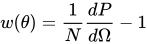


Sources and credits
This article is adapted from the Wikipedia article “Angular correlation function”, written by its contributors and licensed under CC BY-SA 4.0. Fathomly has changed the layout, removed citation markers, navigation and maintenance notices, and adjusted punctuation. This adapted version is shared under the same license. For references, see the original article.
Fathomly is not affiliated with or endorsed by the Wikimedia Foundation. Spotted a problem? Tell us.